A few months ago I sold every AI-related stock I owned: Microsoft, Nvidia, Nebius. Not because I stopped believing in the companies, and not because I think the technology is fake. I sold because something about the money sloshing around AI right now doesn't add up, and I'd rather be out too early than out too late.
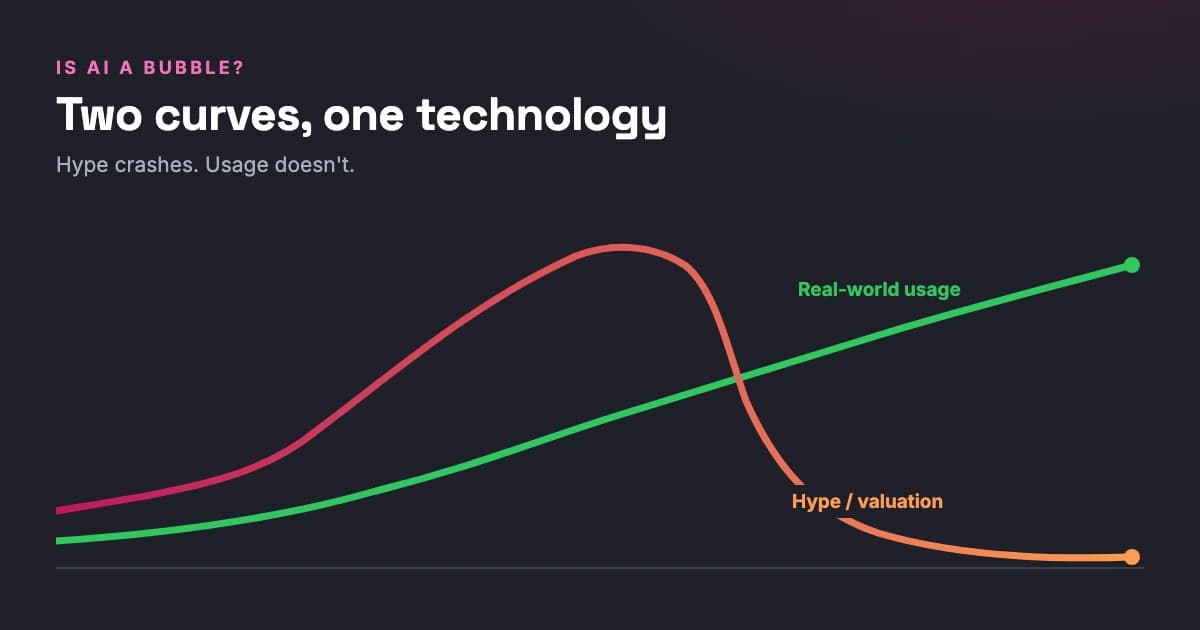
Here's my actual answer to the question everyone keeps asking: yes, I think AI is in a bubble, and I think it's going to burst. But that answer says almost nothing about whether AI itself is a bubble. Those are two different questions, and most of the discourse conflates them constantly.
What everyone else is saying about the AI bubble
You don't have to look far for opinions on this. Ray Dalio says the AI boom is "in the early stages of a bubble", and puts current euphoria at about 80% of what preceded the 1929 crash and the 2000 dot-com top. Jensen Huang says the opposite: no bubble, full stop, just "the largest infrastructure build-out in human history," and he's happy to use the phrase "this time is different," four words that have preceded a lot of bad investing decisions. Sam Altman sits somewhere in between: he's called AI spending "a huge issue" for some companies and warned of a possible "spectacular implosion," while still defending OpenAI's own trillion-dollar-scale infrastructure bets. Michael Burry, who famously called the 2008 housing crash, has been building short positions against Nvidia, Micron, AMD, Palantir, and Tesla, betting specifically against how the AI buildout is being financed. And Jeff Bezos calls it an "industrial bubble," which he argues is a different, more forgivable animal than a purely financial one: even if it bursts, he says, society keeps the benefits once the dust settles.
That's a lot of smart, informed people looking at the same set of facts and reaching very different conclusions. And it's not just individual voices anymore: the Bank of England's own financial stability report warned that a sharp, US-led AI correction could shave up to 2.2 percentage points off UK GDP. When a central bank starts modeling that scenario by name, this stopped being a fringe take a while ago.
Bubbles are not new, and neither is this argument
None of this is a new pattern. In 1929, a decade of genuinely transformative technology (radio, cars, mass electrification) got wrapped in so much speculative leverage that the crash that followed dragged the whole economy down with it. In 2000, the internet did something similar on a faster, smaller scale: real technology, real long-term value, and a stock market that priced in about thirty years of growth in about three.
Here's the detail most people get wrong about that second one, myself included for years: the popular number is that 90% of dot-com companies died. It's a great headline number, and it's also mostly folklore. Real research on the era is messier: one study of companies that raised venture funding in 1999 found a five-year survival rate of 48%. Roughly half survived. Still brutal for a lot of investors and founders, just not the wipeout the "90%" figure implies.
And here's the part that actually matters for this article: none of that failure rate says anything about whether the internet worked. It obviously did. Pets.com died and Amazon didn't, and twenty-five years later nobody argues the internet itself was a lie. The bubble was financial. It was money chasing a story faster than the story could deliver. The technology underneath it kept compounding anyway, bubble or no bubble. That's the exact pattern I think is playing out again, and it's why I can hold "the AI bubble is going to pop" and "AI is not a bubble" as the same belief instead of a contradiction.
Follow the money
You don't need a finance background to feel that something is stretched right now, you just need to follow a few numbers. Microsoft invests in OpenAI. OpenAI spends a huge chunk of that money on Microsoft's cloud and on Nvidia's chips. Nvidia, in turn, has been investing directly in OpenAI and was reportedly discussing guaranteeing around $250 billion of OpenAI's own data-center debt for a single project in Ohio. Money moves in a loop between a handful of companies, and every time it goes around, it gets counted again somewhere as new demand.
OpenAI's own compute-spending number has been a moving target: at one point the figure floating around was $1.4 trillion over eight years, then it got walked back to around $600 billion through 2030, then revised up again toward $750 billion. That's not a company with a firm read on its own future spend, that's a company throwing darts at a very large board. None of this makes the underlying services useless. It means the financing underneath them is doing a lot of what financing did right before the last two crashes: leverage, circular counting, and a growing gap between spending and the revenue that's supposed to justify it.
Two companies, one country's economy
The part of this that gets least attention outside finance circles is what happens outside the US. Most of the high-bandwidth memory sitting next to every serious AI GPU comes from two companies: Samsung and SK Hynix, both South Korean. Both have gone all-in, pledging roughly $2 trillion combined in new domestic investment, and SK Hynix sold out its entire 2026 chip production before the year even started.
That sounds like a great problem to have, until you notice what it does to a country's risk profile. In June 2026 alone, South Korea's semiconductor exports were up close to 200% year over year and made up nearly 44% of the country's total exports for the month. And when AI sentiment wobbles, so does the whole Korean stock market: on June 23, 2026, the KOSPI fell almost 10% in a single day, tripping a circuit breaker, on nothing more than AI-bubble jitters. That's not two companies having a bad quarter. That's a meaningful slice of a national economy riding on the spending decisions of a handful of American companies thousands of miles away. If the US AI bubble pops, South Korea won't be a bystander watching it happen. It'll be standing directly under it.
Why I sold
None of the above is why I sold, not directly. I'm not a hedge fund, I don't have an information edge, and I'm not smart enough to time a top. What I had was a simpler, older instinct: when I can no longer tell whether a price reflects real usage or just the fear of missing out, I get out and let smarter, better-informed people figure out where the floor is.
I didn't sell Microsoft, Nvidia, and Nebius because I think they're bad companies or because I think AI is a dead end. I sold because the gap between what's being spent and what's being earned kept growing every quarter instead of closing, and because every time I looked for the fundamentals under the price, I found another layer of companies investing in each other instead. That's not a technology judgment. It's a plain, boring risk-management call, the kind anyone holding index funds or individual tech stocks should be making for themselves right now, not because I think I know something you don't, but because the pattern is familiar enough that I didn't need to know something new.
The bubble is real. AI still isn't.
So here's where I land, and it's the same place the idea for this article started: yes, I think we're in a financial bubble, and I think it bursts, possibly badly, possibly soon. Company valuations, circular financing, and a South Korean economy leaning on two companies all point the same direction.
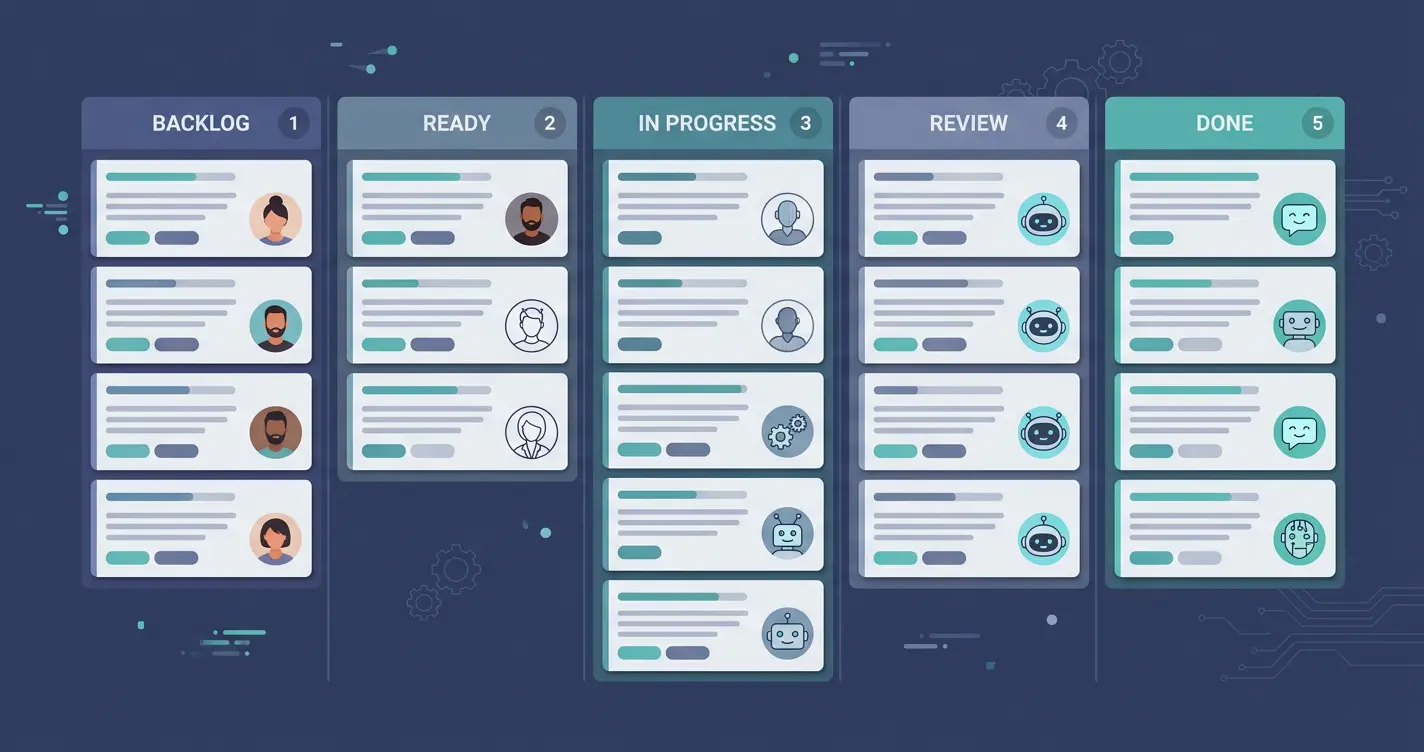
None of that tells you anything about whether AI itself works. I still spend a good part of my working life integrating AI services into production work, I've measured what running a team of AI agents actually costs down to the credit, and I manage boards of AI agents the same way I manage boards of people. None of that stops working the day Nvidia's stock drops 30% in an afternoon. The 1929 crash didn't uninvent electricity. The dot-com crash didn't uninvent the internet. If this bubble bursts the way I think it will, a lot of money gets destroyed, a lot of companies that shouldn't exist stop existing, and the technology keeps getting better and cheaper anyway, probably faster once the froth is gone and the people left standing have to actually make it pay for itself.
If you think I'm wrong, about the bubble, about AI, or about both, reach out. I'd genuinely like to hear it.