I counted my boards this week: a personal Trello, one for my thesis, one for the flat renovation, one running an e-commerce experiment, and one at work. Nobody promoted me, but somewhere in the last two years I became a manager (of boards).
To be clear, I haven't swapped job titles and I'm not about to. But there was no AHA moment either. No morning when I decided to stop being a developer. It crept up on me, board by board, until a chunk of my day started to rhyme with what managers do: writing tickets, assigning them, reviewing what comes back.
Here's the twist: on the newest boards, the assignees aren't people.
The boards crept up on me
The personal Trello board has been running for four or five years, maybe even more. Groceries-level stuff next to long-term plans; nothing fancy, just everything in one place.
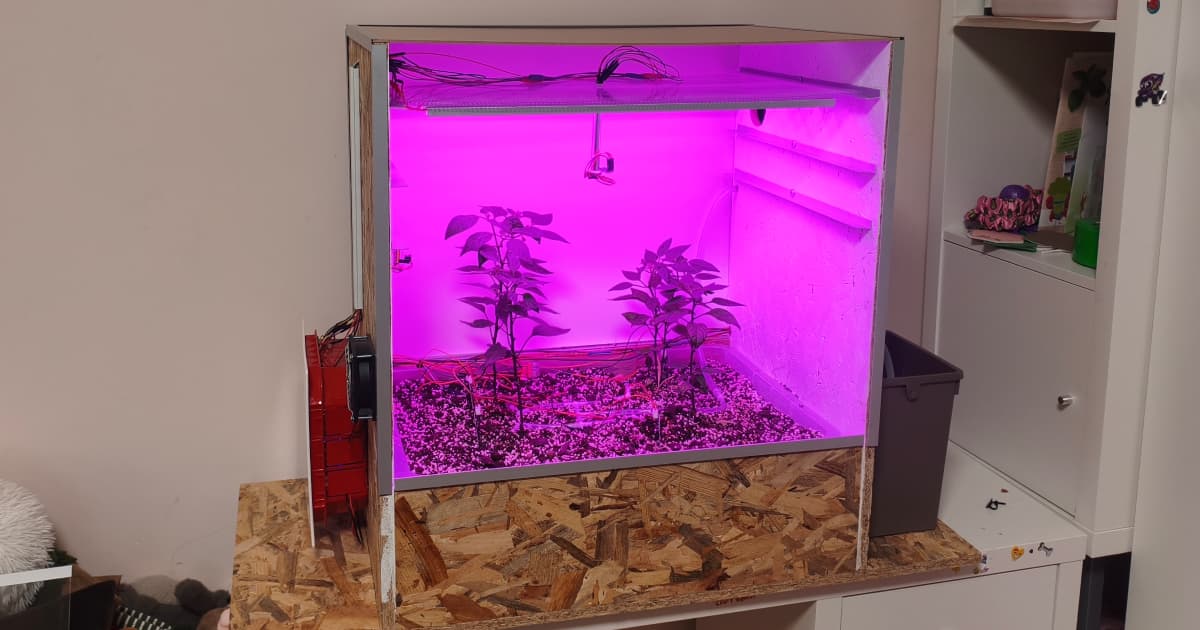
Then my thesis work started, and the detailed tickets threatened to bloat that board, so the thesis got its own one. (The thesis, a mini greenhouse with an AI assistant on top, already made a cameo in my AI-102 story, and it has its own write-up now too.) Then we started renovating the flat: again too many specific tickets, plus I wanted my wife to see and move them too. Another board.
So far, nothing remarkable. Boards are simply the best format I know for one thing: visibility. One ticket, one owner, one column telling you exactly where things stand. The remarkable part is what happened to the "owner" half of that sentence.
Then the assignees stopped being human
The tickets on those three boards are still managed by me, and they probably will be for the near future. But here's what happens on the newer boards.
For an e-commerce experiment I'm running, I built my own tool. It's not Trello and it's not Jira, but it converged on the same shape: a board. A team of AI agents does the research, the brainstorming, the SEO work and everything else, and after trying different setups I keep arriving at the same conclusion: a board is the best format for tracking agents too. That tool deserves its own detailed article, and it will get one soon.
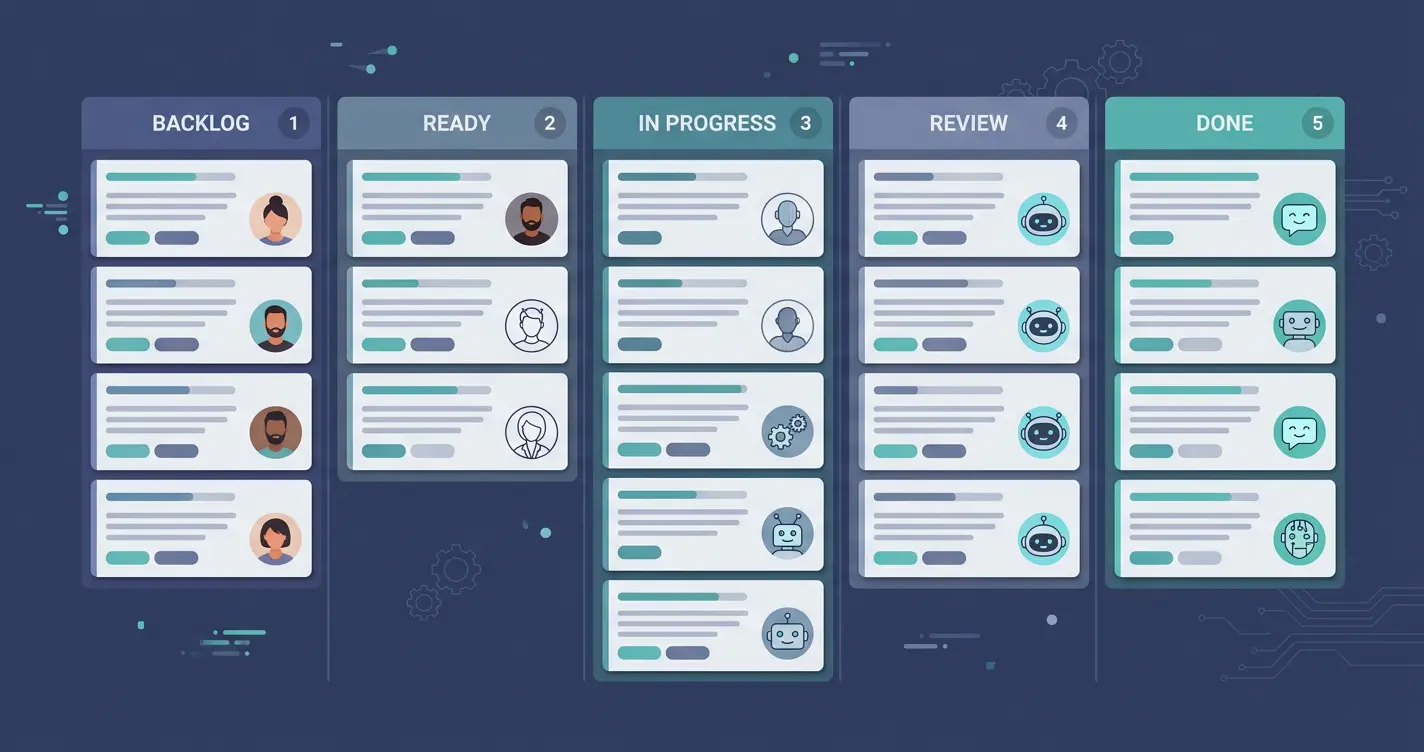
At work, we're experimenting with an internal product for managing coding agents: different roles, different skills, different tools per agent (Figma, git, SEO, QA, dev work), usable for prototyping new things and for existing projects. And guess what it looks like: pretty much Jira for agents.
The pattern is the same everywhere: one ticket, one agent with exactly the skills and tools that ticket needs. It just clicks, and I see it more and more. And it's clearly not just me: tools like Vibe Kanban exist because a lot of developers independently landed on the same shape.
That "one ticket, one agent" pattern has a shape to it once you've watched enough tickets move across a board:
The new job: why, not how
Compare my days now with two years ago and the shift is obvious. I spend much less time on specific language syntax and much more on the question behind the ticket: why should this happen at all. The product itself, the business needs, the project architecture, choosing the best technology for the case. Less how, more why. This is exactly the "building with AI" part I promised in my first post, showing up faster than I expected.
I won't pretend it's comfortable. The hardest part is the mountain of choices appearing every single day: models, workflows, context managing, prompt managing, agentic IDEs, and everything in between. Coming from the frontend world, the feeling is familiar: it's JavaScript fatigue all over again, overwhelming and full of options at the same time. Difficult and good at once.
To everyone who misses the old way
Not everyone likes where this is going. Threads like Tell HN: I Lost Joy of Programming describe AI-assisted work as explaining tasks to an LLM and waiting, more management than craft. Others say reviewing a pile of agent PRs just produces noise and slop. I understand the feeling, and I think missing the past is completely expected.
But here's my answer: we became software engineers to solve real-world and business problems, not to select the 16th element from an array. We already went through this. We don't write zeros and ones anymore, we don't feed punch cards into machines, and plenty of other professions evolved the same way without the world ending. It might be difficult, but we should think big.
To me this is the old difference between a coder and an engineer, and it's a difference in the way of thinking, not in the tooling. Which, I admit, sounds like terrible news for juniors: architectural judgment is exactly the thing you used to build by writing a lot of code yourself. Juniors are in a difficult position, no doubt. But AI could also be their best friend, and it all comes down to how they use it.
Will we all be managers?
Microsoft's 2025 Work Trend Index predicts that every employee becomes an "agent boss": someone who builds, delegates to, and manages agents to amplify their impact. Two years ago I would have filed that under corporate futurism. Now I look at my own tabs and I can't argue.
I believe that future is coming whether I want it or not. It will have drawbacks, some we probably can't see yet. But it's a new area, and the best we can do is adapt early. And judging by my renovation board, it won't stop at work: the manager habit follows you home, and honestly, it works there too.
So that's my answer to my own question: yes, I think we're all becoming managers of Jira-like boards, at work and beyond. The real question is what we do with the time and attention this frees up. My bet: focus on building useful things, not just writing code. That was always the point of programming anyway.
What does your board count look like? If you're seeing the same shift, or you think I'm completely wrong about it, reach out. Both conversations sound fun to me.